I Refused to Let My Stepson Sleep Under My Roof — and Everything Changed After That
I Refused to Let My Stepson Sleep Under My Roof — and Everything Changed After That
At first, it was just a feeling. The kind you try to ignore because you don’t want to believe something might be wrong.
My stepson is 17 and usually stays with us on weekends. We’ve never been especially close, but things were civil. Then, suddenly, my daughter — only 14 — started begging me to make him stop coming over. No explanations. No details. Just quiet panic in her eyes and the same sentence over and over: “Please, Mom. I don’t want him here.”
That alone was enough to scare me.
One afternoon, while he was out, I went into his room to grab some laundry. Near his bed, I noticed a strange pile of socks pushed against the wall. It felt careless… out of character. I moved them aside — and froze.
Underneath was a small collection of items carefully stacked together: a photo of our entire family, one of my daughter’s old school pictures, and a handmade card she had made for her dad years ago. None of it was harmful. Nothing explicit. But it didn’t belong to him. And no one knew he had it.
My stomach twisted.
When I showed my husband, he waved it off.
“He probably just wants to feel included,” he said. “Maybe he’s sentimental.”
I wanted to believe that. I really did.
But I couldn’t shake the way my daughter had been shrinking into herself.
That night, I asked her again — gently, slowly — if something had happened. She shook her head.
“He didn’t do anything,” she said. “Not really.”
Then she paused.
“He just stares sometimes. Too long. And asks weird questions… about our life before he came.”
She told me she didn’t feel unsafe. Just unsettled. Watched.
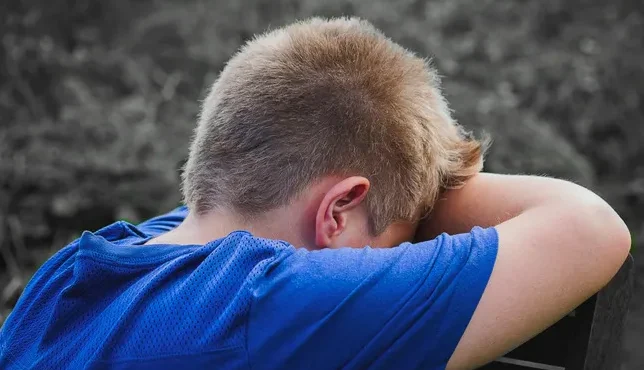
When I tried to talk to my stepson, he shut down completely. Wouldn’t look at me. Wouldn’t answer. Later that night, he sent me a long message saying he felt invisible in our home — like he was always on the outside, looking in at a family he’d never truly belong to.
That’s when it hit me.
He wasn’t being creepy.
He was lonely. Confused. Desperate to feel connected.
But my daughter’s discomfort was real. And I couldn’t ignore it.
I asked my husband if his son could stay with his mother for a few weekends — just until we figured out how to reset boundaries, maybe bring in counseling, maybe help everyone feel safe again.
Now everything feels broken.
My husband is angry.
My daughter has gone quiet.
And my stepson won’t answer my texts at all.
I keep replaying it in my head, wondering if I protected my daughter… or pushed a hurting teenager even further away.
And the hardest part is this:
I don’t know if I made the right choice — or if I just made things worse for everyone.
The next few days were heavy with silence.
My husband barely spoke to me unless it was necessary. When he did, there was an edge in his voice — like I had accused his son of something unspeakable, even though I never did. He kept repeating the same thing: “He’s just a kid. You overreacted.”
But every time he said it, I thought of my daughter’s face when she begged me to make the visits stop.
I decided we couldn’t keep avoiding the truth.
I asked my daughter if she would be willing to talk to a counselor — not to accuse, not to punish, but to help us understand what she was feeling. She agreed, quietly relieved. The counselor helped her put words to something she hadn’t known how to explain: she felt like she was being studied, compared, measured against a life that existed before her stepbrother ever arrived.
Meanwhile, my husband reached out to his son’s mother. What she told us stopped him cold.
She said her son had been struggling for years with feeling replaced — first by his father’s new family, then by a younger sister he never truly bonded with. He had kept mementos from our home because they made him feel like he belonged somewhere. Like proof that he was part of something real.
When my husband finally spoke to his son again, it wasn’t to defend or accuse — it was to listen. For the first time, he acknowledged that loneliness can turn into behavior that crosses emotional boundaries, even without bad intentions.
We set new rules. Clear ones. No entering my daughter’s space. No personal items without permission. Open conversations instead of silence. And yes — family therapy, even when it felt uncomfortable.
The weekends apart didn’t become permanent. Slowly, carefully, visits resumed — shorter at first, supervised, structured. My daughter regained her confidence. My stepson learned that belonging doesn’t come from holding onto pieces of people, but from trust.
It wasn’t a perfect ending. It was a fragile one.
But now, when I look at my family, I don’t see villains or victims. I see people who needed boundaries as much as they needed compassion.
And I’ve learned this the hard way:
Protecting a child doesn’t mean abandoning another — but ignoring discomfort only guarantees it grows in silence.Move upMove down