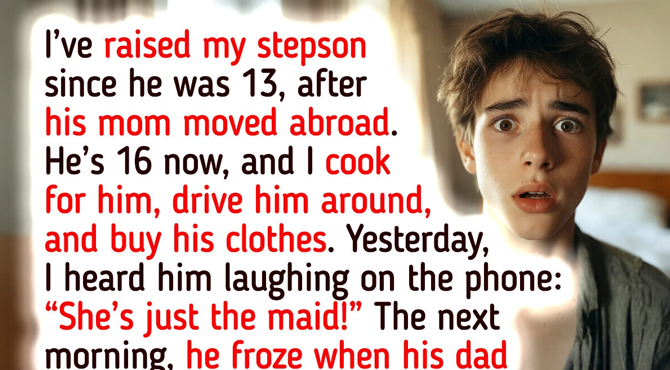
I Refused to Tolerate My Stepson’s Disrespect — He Faced Harsh Consequences
Trying to earn a teenager’s respect as a stepparent isn’t easy, especially when boundaries are pushed and trust is still forming. Issues with discipline, household rules, and communication often come with the role — and one of our readers knows this all too well.
Here’s Carla’s letter:
Hi,
My stepson is 16. I’ve been raising him since he was 13, after his mom moved abroad. I drive him everywhere, buy his clothes, cook his meals, do the laundry — everything. I’ve done it out of love, but I always expected at least a basic level of respect.
Yesterday, I overheard him laughing on the phone with his friends and saying, “She’s just the maid!” like it was a joke. It crushed me — but more than that, it made me realize how tired I was of being taken for granted.
The next morning, he froze when his dad told him, “Pack your bags; you’re spending the summer with your mom.”
Here’s the thing: I had called her earlier that morning and spilled everything. She actually agreed he needed a reality check. So, no more home-cooked meals, no more rides, no more me doing literally everything while he mocks me behind my back.
He begged, “Please let me stay. I’ll be better.” But honestly? I was done. Fast forward three weeks, he called. Crying.
It turns out his mom works 12-hour shifts, and now he has to cook and clean for himself and take two buses to get to his summer job. That’s when it hit him that I wasn’t “just the maid.” Between sobs, he actually said, “I’m sorry…”
I replied, “Sorry doesn’t pay the maid.” Part of me feels satisfied — maybe he’s finally learning what respect means. But another part of me feels guilty for being so harsh.
So am I wrong for letting him learn this lesson instead of immediately forgiving him and taking everything back on my shoulders? How do you teach respect without becoming the nightmare stepparent?
— Carla
Thank you so much for sharing your story with us, Carla!
- Respect grows from consistency, not guilt — If you cave the moment you feel bad, the lesson disappears. Holding your boundary calmly shows that respect isn’t negotiable or mood-dependent. Teens notice patterns more than speeches.
- Use consequences that teach, not punish — It’s tempting to lash out or withhold love, but consequences that force learning are more powerful. Making him handle chores, cooking, or commuting isn’t revenge; it’s a hands-on lesson in respect and independence.
- You’re raising a future adult, not winning a moment — The goal isn’t to make him feel bad today, but to help him become someone who understands effort, gratitude, and accountability tomorrow. Sometimes discomfort is part of growing up.