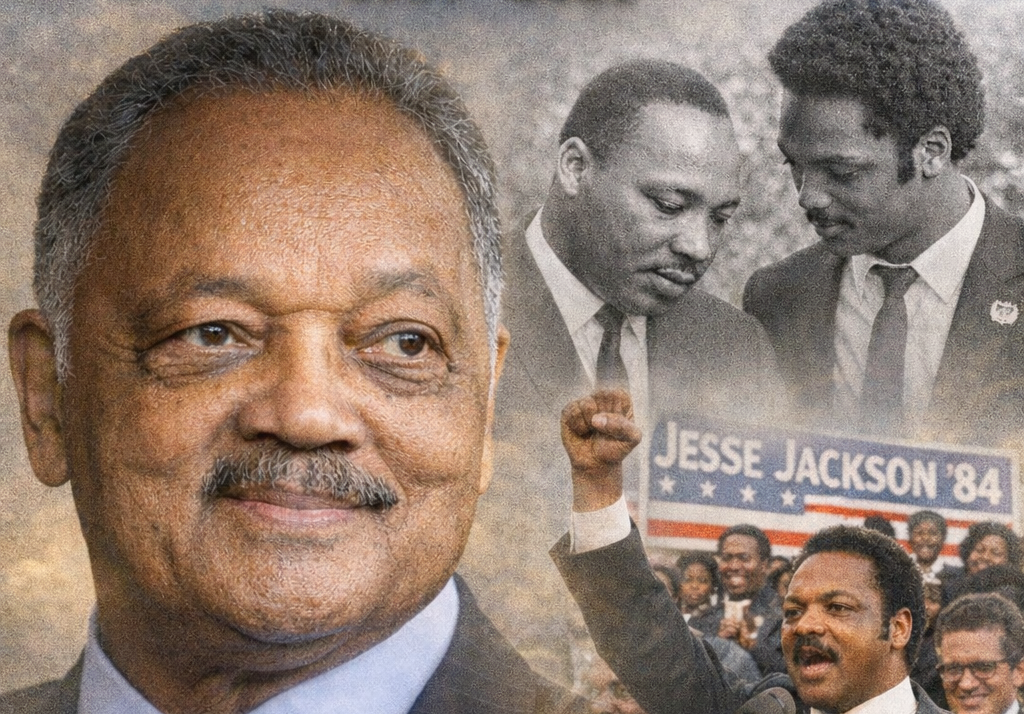
Rev. Jesse Jackson Dies at 84: A Towering Voice of the Civil Rights Movement
Rev. Jesse L. Jackson Sr., one of the most influential civil rights leaders of the late 20th century and a two-time presidential candidate, has died at the age of 84. His passing marks the end of a political and moral career that spanned more than five decades and helped reshape American public life.
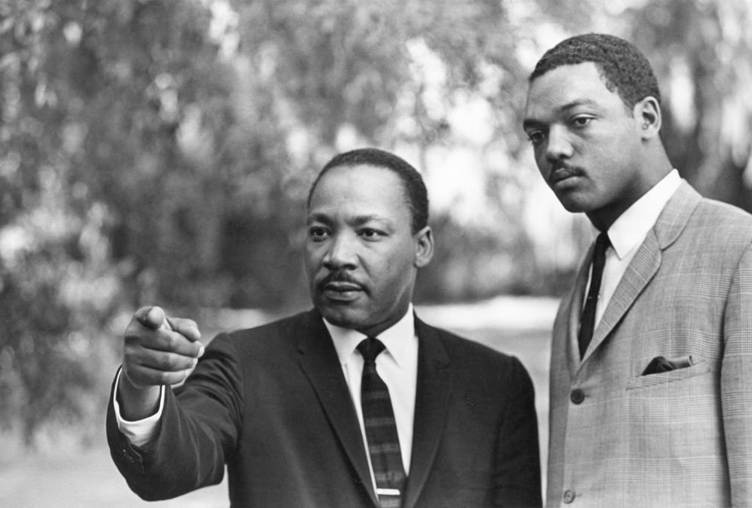
Jackson rose to national prominence as a close associate of Dr. Martin Luther King Jr., standing alongside him during pivotal moments of the Civil Rights Movement. After King’s assassination in 1968, Jackson emerged as one of the movement’s most visible heirs, continuing the fight for racial justice, economic equity, and political inclusion.
From Activist to National Political Figure
In the 1970s, Jackson founded Operation PUSH (People United to Save Humanity), later merging it into the Rainbow/PUSH Coalition, an organization aimed at building multiracial political alliances around issues of economic and social justice.
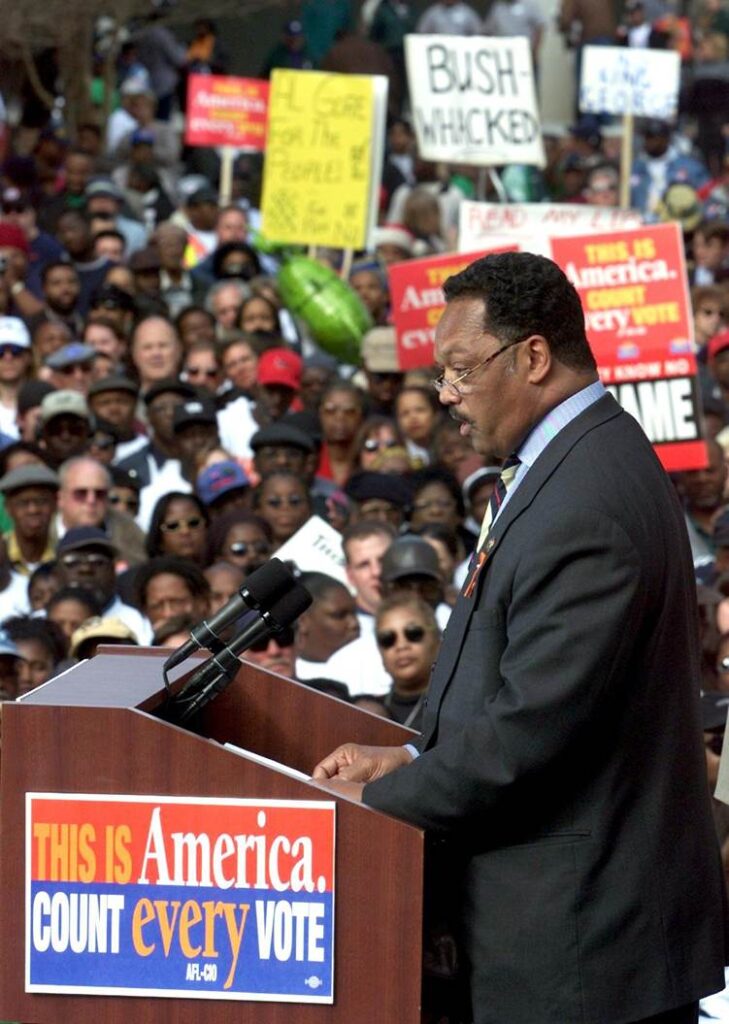
His 1984 and 1988 presidential campaigns were historic. In 1988, Jackson won several Democratic primaries and caucuses, demonstrating that a Black candidate could compete seriously for a major party nomination. Though he did not secure the nomination, his campaigns expanded political participation and laid groundwork for future candidates of color.
Jackson’s platform emphasized voter registration, education reform, workers’ rights, healthcare access, and international human rights. His ability to connect civil rights activism with electoral politics made him a unique and powerful presence on the national stage.
A Voice Beyond Borders

Throughout his life, Jackson also played a role in international diplomacy and humanitarian efforts. He met with world leaders, advocated for the release of political prisoners, and used his platform to address global inequality. His work extended far beyond U.S. politics, reflecting a belief that justice movements were interconnected across nations.
Health Challenges and Later Years
In recent years, Jackson had faced significant health challenges, including a Parkinson’s disease diagnosis. Despite declining public appearances, his legacy remained firmly embedded in American political history. Leaders across the political spectrum have issued statements recognizing his impact, noting his contributions to expanding democratic participation and amplifying marginalized voices.
A Complicated but Undeniable Legacy
Like many influential figures, Jackson’s career included controversy and criticism. Yet even his detractors acknowledge the scale of his influence. He helped institutionalize the idea of coalition politics, bringing together diverse communities under a shared banner of civil and economic rights.
His activism helped normalize the presence of Black leadership in national electoral politics, shaping the path for future generations.
Remembering a Movement Builder
Rev. Jesse Jackson’s life cannot be confined to a single headline. He was a preacher, organizer, political candidate, negotiator, and community advocate. More importantly, he was a bridge between the Civil Rights Movement of the 1960s and the evolving political landscape of the decades that followed.
As memorial plans move forward, many will remember him not only for the offices he sought, but for the communities he mobilized and the voices he amplified.
With his passing at 84, the nation reflects on a chapter of American history he helped write — one defined by resilience, protest, coalition-building, and the persistent pursuit of justice.